

 Apple Podcast
 Spotify
 iHeartRadio
Watch
 YouTube
Summary
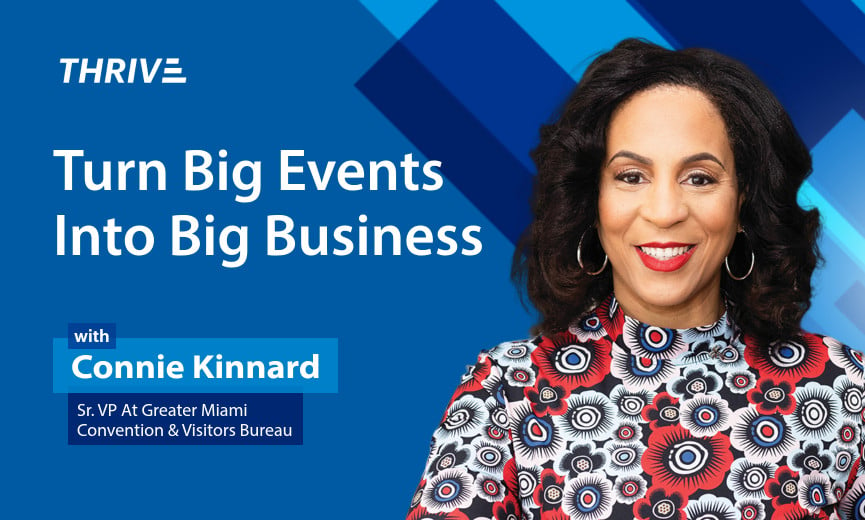
Big events don’t just bring crowds, they bring opportunity. Connie Kinnard, Senior VP of Multicultural Tourism at the Greater Miami Convention and Visitors Bureau, shares how small businesses can prepare for major events, from updating your digital presence to building capacity for a surge. Whether you’re in a World Cup city or not, these strategies can help your business capitalize when the moment arrives.
Topics include:
00:00 – Episode preview and guest introduction
01:21 – Connie’s career path: From Nashville to Miami
04:08 – What a convention and visitors bureau does
06:47 – Training managers to support employers
08:16 – Preparing for the World Cup and other big events
12:01 – Online presence, search, and AI: How visitors find you
14:27 – Safety and security considerations for big events
16:08 – Tailoring marketing to international visitors
19:38 – How the World Cup differs from other major events
24:47 – Last-minute World Cup advice for local businesses
28:06 – Wrap up and thank you
Connect with Connie:
> LinkedIn
Take the conversation further with The 39-Day World Cup Playbook. Your guide to staffing smart, managing overtime, and protecting your margins from kickoff to the final whistle.
Simplify your business operations: Visit paychex.com/Meet-Paychex to learn how Paychex can handle your HR and payroll so you can focus on what counts.
Have a question for upcoming episodes or a topic you want covered? Let us know!
View Transcript
Connie Kinnard (00:00)
You know, when you think about tourism and business, people sometimes, with any big event, they may come to the destination and not technically go to the actual event. They may come to be a part of maybe some of the ancillary things that go on. And I think that, you know, you mentioned World Cup, but let's just say any big event that may go on in, in whatever destination, you constantly have to prepare yourself for the opportunity to get business.
Announcer (00:34)
Welcome to THRIVE, a Paychex Business Podcast, your blueprint for navigating everything from people to policies to profits. And now your host, Gene Marks.
Gene Marks (00:44)
Hey, everybody, it's Gene Marks. And welcome back to another episode of the Paychex THRIVE Podcast. Thank you so much for being here, and I am thrilled to have Connie Kinnard here with us today. She is the senior VP of Multicultural Tourism and Development at Greater Miami Convention and Visitors Bureau. So, Connie, first of all, thank you so much for joining us.
Connie Kinnard (01:06)
Thank you. Thank you for having me. Appreciate it.
Gene Marks (01:09)
Yeah, you got it. And what's the weather like in Miami today?
Connie Kinnard (01:12)
The weather is beautiful. It's warm. It's almost always warm in Miami. Beautiful day.
Gene Marks (01:19)
It's a great city. Yeah, it's a great city. You were telling me before we started recording so you're originally from Nashville and then took this job in Miami. Tell me that story.
Connie Kinnard (01:28)
I'm from the Nashville area and happy to be here now in Miami for going on 11 years. Miami at the time, and we're going to be talking about small business and community and development and big events, but at that time, around 11 years ago, the Miami Convention Bureau wanted to amplify its efforts in connecting with the community, connecting with events, businesses, to further engage and amplify that connection to tourism. And so they developed the department called Multicultural Tourism, which kind of really has several levels. And I'm sure we'll talk a little bit about that. But I got a call in Nashville. I was at the Convention and Visitors Bureau there, had worked there for 19 years, and got that call about this opportunity. And here I am, and have just enjoyed the journey thus far.
Gene Marks (02:26)
What's different about the scene in Nashville compared to Miami? I'm curious. You were there for 19 years in Nashville. I didn't realize that. How does it differ?
Connie Kinnard (02:33)
You know what, all cities have their assets, the things that make them unique. And as a convention and visitors bureau, a DMO, some of the things we do are to amplify those things, bring those things out and encourage visitors to come and for our residents to enjoy and experience. I think Nashville is a music mecca. Country music is one of the big things, but also it has a lot of layers of other things related to the music scene. And so, for Nashville, part of the lens of the tourism piece really probably 60, 65% centered around music and what comes from that, which is a great brand to have, and so, they've done very well. In Miami, it's different and unique. And what I love is that there's so many cultures here, so many different facets and layers and levels to Miami that, you know, our way of promoting our destination, we promote through the lens of music as well, but we also promote through the lens of culture, through art, through our wonderful weather and water, people like to come and things that surround that. And then of course, you know, our businesses that are here as well. So I think they're both wonderful cities. Miami's just, it's just a different. We're so close to Latin America and the Caribbean as well, that the vibe here has an international feel, but yet we're still in the U.S.
Gene Marks (04:10)
You know, we're going to talk about the World cup in just a minute because that's obviously a huge event that's coming to your city, but before I jump into that, you know, I've always found when I see visitors, you know, in, you know, bureaus, convention bureaus in different cities and most larger cities have them, that they tend to get under used like, you know, the level of awareness to businesses in the community is never as high as I would imagine. And yet I know that like your convention and visitors bureau does provide services and help for your local small businesses. I'm just kind of curious, like say you were speaking, our audience is around the country, so, you know, say you're with a visitor's bureau in any city in the, you know, in the country and you can, you know, focus on Miami too. What would you tell like the local business community, you know, to be like here, here's how you should be taking advantage of your local convention and visitors bureau.
Connie Kinnard (05:06)
All right. You know, convention and visitors bureaus, they're known as DMOs, destination management marketing organizations, management or marketing depending, are really behind the scenes entities in a way because a lot of the events and the activities that go on in a destination we're a part of in some way. And sometimes people don't realize that there is an engine behind doing that. And so, many times because they are not familiar with the engine, it gets underutilized, to your point. People don't realize that there's help and there are entities that can kind of help connect the dots. And so I would tell people, small businesses, if you have anything, particularly we're talking DMOs related to tourism, and we always talk about businesses that directly or indirectly affect tourism because the businesses like a restaurant or like a tour company, well, we know hotels, of course, we know those are tourism-related, but also, there are other businesses that could also benefit from tourism. So don't be scared to connect with your convention and visitors bureau to see what's going on. You know, are there opportunities for partnership? Are there any programs that help the business community connect better with tourism? Every convention bureau is different, so that could look different in your destination from what we'll talk about today in Miami, but definitely connect those dots.
Gene Marks (06:49)
All right, that's great advice. All right, so let's talk about Miami and let's talk about the World Cup coming to the city. Now we have the same thing coming to Philly, as well. So I mean, it's a big deal. And particularly Miami, I mean, just, you know, like you said, multicultural, you know, a huge population. You know, what are you expecting? How do you think this is going to be impacting the city this summer? What are you preparing for?
Connie Kinnard (07:12 - 09:25)
That's right. So, you know, we know that people will be traveling all over. People, when they're coming in, particularly international, come to spend time in the various locations in the U.S. and in Miami. So, it's not just a day trip or a two-day trip. It is a trip that people will spend a few days because in addition to just being here for the matches, they want to be in the destination. And you know, when you think about tourism and business, people sometimes with any big event, they may come to the destination and not technically go to the actual event. They may come to be a part of maybe some of the ancillary things that go on. And I think that, you know, you mentioned World Cup, but let's just say any big event that may go on in whatever destination, you constantly have to prepare yourself for the opportunity to get business. And what, you know, you mentioned maybe what we're doing, how we're preparing from the Convention Bureau standpoint, we have an area that's called Tourism Business Enhancement in which we work with our community, 365, our businesses on capacity building and we actually, you know, host programming from how to market, how to like legal advice, how to do anything really related to your small business. Because what we feel is this, when these big events come, you have to already be in the process of being ready because things move fast. And so, we try to prepare the businesses, whether it's FIFA World Cup or whether it's a Super Bowl that may come in the future, or whether it's some large music festival wherever, you kind of have to be ready in advance so that when you hear about these things, you're ready to pivot. Yeah.
Gene Marks (09:26)
You know, if you're a business owner and you're always looking for more work, and you mentioned as well that you know, there's indirect work that can be gotten, you know, from an influx of tourists, and you also mentioned that it's not just the World Cup, it could be any big event in your city, like the Super Bowl or anything like that.
Connie Kinnard (09:43)
Right.
Gene Marks (09:44)
What would you say to business owners to prepare themselves for an influx of visitors into the city, particularly if it can benefit, you know, even indirectly, their business? What should they be doing? Like, you're, the business in Miami right now, you know, we've got the World Cup is coming. It's not till the summer. What should they be doing, like, right now to make sure that they're prepared?
Connie Kinnard (10:06)
So, of course, depending on the type of business, there's certain businesses just realistic, that will get, your restaurants that are in the perimeters of where people are, like for Miami and the perimeters of the downtown and the perimeters of the Miami Gardens in the areas. Make sure that on your social media that you, you know, you work with some marketing and media folks that search amplifications are there, search taggings are there when people are looking for, you know, certain things, tours, make sure all those things connect so if somebody is doing a search, it's likely that your search will rise to the top. I do think it's very important you mentioned what would a person be doing now? So, we're in April. So, there's social media and things of that nature. But let me, I want to backtrack a little bit because we're talking about Miami, but we're also, I know that this will touch other businesses all over. It's very key that when you hear about, when you see the press release two years ago that says XYZ has been booked in your destination, it's very important that at that point you start doing your homework, your research on who the players are, decision makers, partners in these events, and to start, and I tell our businesses, and we talk old school relationships, start those relationships there. Then, because honestly, people, you know, do business with people they know. So, it's good to get started at that point. Where we are today, don't get me wrong, there's plenty that a business can do for social and things of that nature to amplify, but a lot of this really has to be done prior, and at this point it's almost like you're ready in mode to receive.
Gene Marks (12:13)
Right. Yeah. I mean the planning is so important. I also liked your point earlier about, you know, just updating your social profiles. I mean, think about you and I when we visit another city, when we're a tourist and we're looking for someplace to eat or even to, I don't know, buy a sweatshirt on a cool night, you know, we're on our phones searching what's nearby or you know what I mean, like that's what tourists do. And you know, you know, if you're a business owner, this is like a real incentive for you to make sure that your social, your listings, whether it's on Google Reviews or on Yelp, Facebook, you know, where people search, is up to date and ready to go and current with information. Right. I mean that's, that's super important to do now.
Connie Kinnard (12:58)
Absolutely. I mean you know, I would encourage a business to go online. Sometimes you have to also get your stakeholders to even like maybe even say hey search my, this, you know, my venue or my business. What comes up? ChatGPT. Put me in ChatGPT. What comes up from that standpoint? And then from there, if you see the things that maybe shouldn't come up or you rather it maximize more, go into your website and change those things and then start seeing how your searches take place. And you said something that's very key. You think about it, FIFA World Cup or an event, international travel. The travelers have started their planning probably a year ago, six months. Even domestic travel. If you think about how an individual would plan a trip, they're looking in advance for these things. Even restaurants. Of course, sometimes when you get in a destination you do quick searches, but you do some of that pre homework. And so I would encourage people to make sure things are up to date, make sure their search options are maximized online because people are planning, and you don't want to miss out because you waited too close into an event coming in to do the things that you needed to do when people have already been online making decisions six months ago.
Gene Marks (14:30)
Connie how about security? I mean, it is, you're having a lot of visitors. You know, obviously, that could have an impact on, you know, potential incidents or crime. Soccer fans are very passionate about what they follow, and, you know, sometimes fights break out and all of that. Should, you know, do you give any advice to your business owner, you know, your community about making sure that they're safe?
Connie Kinnard (14:54)
You know, I think we're a big city destination, if you will, or a known destination, Miami, just like any other destination, people have to just pay attention these days. You know, there's no place that's totally free from events that happen like that. I think that we all have to just be smart. I would encourage businesses smaller or large or whatever kind of business that interfaces with community and with visitors, you have to do those things depending on your business because things are a little different that will bring value to a visitor coming. That, you know, could be a level of assurity or security if a visitor came that they could feel pretty confident that it's a space that they could be in. What does that look like for your business? I can't totally say. Not sure. Is it security? Maybe. Is it just having lights and places lit up around your venue, maybe, Whatever that is. But I always think that security, safety is something that a business should think about.
Gene Marks (16:09)
Makes sense. It makes complete sense.
Connie Kinnard (16:11)
Yeah.
Gene Marks (16:12)
We have visitors here that come, I don't even know what matches, I don't want to put you on the spot, but I don't know the specific matches that are being played in Miami, like, what countries they're coming from. Do you know that off the top of your head?
Connie Kinnard (16:21)
Yeah, no, I have them, but not on me.
Gene Marks (16:24)
Yeah, that's fine. The reason why I'm asking the question, though, is that, you know, that it also seems like a real tailoring in your marketing approach as well. If you have teams coming from a certain country or speaking a certain language, it seems, you know, businesses might want to think ahead about, hey, you know, maybe we should be hanging their flags outside, or maybe we should, you know, hire somebody that, you know, speaks that language. Or maybe our online, you know, promotions that we're doing should be in that native language as well so that people, you know, can feel more welcome like they belong there. Do you know if businesses are doing things like that, like tailoring their...
Connie Kinnard (17:05)
Right. So that's an interesting question. So, twofold. One of the things that we do and believe in how we promote our destination is that we promote, you know, everybody is interested in certain things, art and culture, and all the things. So we promote it kind of in this holistic way from a destination, from a convention and visitors bureau. For Miami specifically, what you mentioned is one of the unique things about Miami. So earlier in this talk, you asked me the difference between Nashville and Miami and promoting and things like that, based upon my history. All of the countries, and I don't have everything on top of mind, so I don't want to misquote on that, but when you think about Miami's demographic, the diaspora and the cultures here, to be honest with you, those cultures are here. So whether it's Latin America, whether it's our Haitian community, whether it's, you know, from Africa, Jamaica, so many diverse languages are already here. The culture and the multiculturalism here is very strong. So to your point, yes, I know businesses, of course, we try to tailor to certain countries and languages. And, you know, even on our website, you can see it in a certain language. But Miami as a destination, based upon even the matches that are here, the language is so diverse and bilingual already that, you know, it's kind of a almost an organic thing for us, that we're already kind of ready in certain areas for the international travel.
Gene Marks (18:50)
Yeah, it's funny that you say that, too, because that's where you're so different from Philadelphia. You know, in Philadelphia, I mean, we're a diverse city, but nowhere near as diverse as Miami is. And I truly believe when teams come here that there will be a real advantage for local businesses in my city to really try and make themselves stand out by doing things in native languages and hanging flags and all that kind of stuff, because I think it'll make them stand out, you know.
Connie Kinnard (19:19)
Right. And it also makes the visitor feel at home and welcome, although they're not in their home country. When you do those things and you, it makes them feel welcome and also makes them maybe want to come back even after the FIFA World Cup, you know, for another event. So those things are very important.
Gene Marks (19:38)
I love that, Connie. You know, so the World Cup is a fairly unique event, you know, coming to the U.S., I mean, but Miami is no stranger to, you know, hosting big events. You know, the city's hosted the Super Bowl before and other large events. But is this one like, you know, how different is this event compared to some of the others that you've been involved in in the past?
Connie Kinnard (20:01)
I think, you know, just the fact that this is, it's a Miami, but it's also a U.S. thing, other cities in this whole makes it this be very unique. In some ways it feels like you know, we're all working together to make sure that this works, if that makes sense. So I think that's the case, and that, you know, when we say, for instance, we've hosted Super Bowls before, as you mentioned, well, it's Miami's year for a Super Bowl, so you have that. But now we're talking to other cities like Philadelphia and Houston, some of the other cities that have matches, you know, sharing information, you know, how is your city doing, and all those things. So this one is, it's almost like just because it's a collective group of destinations, it makes it be a little different. And you know, as I mentioned, behind the scenes, getting these events is a thing. And so just knowing as a U.S. that we were able to get these matches, these games here is different. Different from like, as you mentioned, a Super Bowl specifically, because that's specific to our destination. This is a, this is a bigger, a bigger platform.
Gene Marks (21:19)
Makes sense. Yeah, that makes a lot of sense. So are you coordinating at all with other, your sort of colleagues, or other similar people and convention and visitors bureaus in the other cities that are hosting the World Cup? And again, is there, is that a potential opportunity for any businesses as well, where they can reach customers that not necessarily might be in Miami, but because they're connected to the World Cup experience, find customers in other cities?
Connie Kinnard (21:47)
So, a couple of things. How we work, and this is another kind of maybe an education to the listeners on convention bureaus, a lot of them, including ours, we have a sports department. So, there is various levels, multicultural tourism. We connect with businesses. We have our sports tourism department. That also is a layer of this. We have conventions. That also is a layer. So, I say that to say any business that may connect with their convention bureau, just to remember there are a lot of different areas and facets that of connection points for a business. So to your question about connecting with other bureaus, I know that our sportsmen, as they have been such an integral part of the whole FIFA getting it here, the booking it, have been in touch with other destinations. Of course, our focus is ours, but you know, it's something so big that I know that there's been, you know, other collaboration. And then to your point about connecting with FIFA from a broader stance of other opportunities. So there's FIFA, you know, the national organization of FIFA. And then when a destination has some games in their destination, there is a host city committee or a host committee in the various destinations. So yes, there are opportunities to connect from a national level. Now it's harder nationally because the host, the national committee also already has some partners. Right. It's a national organization. But on a local level, they also have these host committees that kind of engage more with the community where they are. So businesses should, going back to finding out who the players, when I say the players, who are the key stakeholders in this, a business should find that out as early as possible to make sure that they're connected. And that could include the local host committee. Most of the big events, particularly sporting events, a lot of them do have a local host committee. FIFA does as well as sometimes some of the other big events.
Gene Marks (23:59)
Got it. And what will you be doing during the World Cup? I mean, you're not taking time off, I'm assuming.
Connie Kinnard (24:05)
Well, I think from a standpoint of me and the bureau and all, we always, when we know that something this big is in our destination, you know, we're ready, we're here, we could get a call to need to help do something or another. So we're kind of around, and I think everybody's excited to see what it will bring during kind of our month of time, which is basically for Miami. kind of mid June through mid July. The time frame, what that time frame will bring, and things of that nature. So you know, we're just excited. We're excited. We're always excited when we know visitors will be coming to our destination.
Gene Marks (24:47)
That's great. So just to recap this though, you know, let's talk to your local business owners in Miami. Okay. And anybody else that's watching this, that's in a city where World Cup matches are coming, there's still a little bit of time. Okay. I mean, we're still like, you know, by the time this airs, we'll, we're still, you know, a good month away. What's the takeaway advice that you could have for these business owners to, you know, last minute, you know, what can they do to maybe capitalize on this World Cup event?
Connie Kinnard (25:15)
I would say a couple of things. So I'll go back to making sure that from a social media, Instagram, all the platforms for social, that they're updated and they have some, what I call some buzz about them. Because of when you're just like anybody, if you're online and you're looking and you're trying to make a decision about where to go, whether it's a hotel, a restaurant, tour company, whether it's where I'm going to get my hair done while I'm, you know, in the destination. And that goes back to their businesses that are directly tourism and then the indirect businesses that could, if you market correctly, you could then all of a sudden be a business that people may want to do when they come here. Like, in other words, you come here and you, you know, you need to do something that you couldn't do while you were home, but you need to do it here so you can be a part of that tourism piece. I would say make sure those things are updated. They have buzz. You have to be careful with these big events. Even with FIFA, from saying this is the FIFA this or that. You can't just drop the name FIFA, you know, that easily. Have to be kind of creative so that you won't infringe upon naming. But just make sure everything is updated and attractive to somebody trying to make a decision. The other thing I would say, if you know that you are a business that really could be touched because, you know, maybe, you know, you're in the mix of where traffic will be, you're near the airport, you're near a port, or you're near, like here in Miami and in other places, make sure that from a capacity standpoint, you can handle the business that you may get, because you do remember that people, you know, yeah, they're here for this, but they may come back again. They may tell other people. So, you know, you want to be ready from a capacity standpoint as well for the visitors. You know, don't do all the marketing and all those great things, and people are excited about your place. But then you get there, and then from a capacity standpoint, you can't really fulfill. You don't have enough people and things of that nature. So have your backup plan ready, have your employees ready that you may need to call in case capacity gets busy. So what does that look like for whatever your business is?
Gene Marks (27:37)
Connie, I got to tell you, I mean, again, being from Philadelphia, and I know there's other cities that are hosting World Cup events, I do have to say, like, Miami is probably the coolest place to go to see a World Cup match. So I just envision, like, both the local and fans and the visitors. I feel like there's just going to be an extra level of passion there. So I'm excited for it. I think it's a great event and it's great stuff. So, thanks for all you do and thanks for joining me. It's a great conversation.
Connie Kinnard (28:05)
Thank you. This has been wonderful. Thanks so much.
Gene Marks (28:07)
Sure thing. Everyone, Connie Kinnard is the Senior VP of Multicultural Tourism and Development at the Greater Miami Convention and Visitors Bureau. We want to thank Connie for joining us today. It is a great conversation, and wishing Miami and all the other cities hosting the World Cup and the business owners there to have a very successful summer doing just that. Do you have a topic or a guest that you would like to hear on THRIVE? Please let us know. Visit payx.me/ThriveTopics and send us your ideas or matters of interest. Also, if your business is looking to simplify your HR, payroll, business benefits, or insurance services, see how Paychex can help. Visit the resource hub at Paychex.com/WORX. That's W-O-R-X. Paychex can help manage those complexities while you focus on all the ways you want your business to thrive. I'm your host, Gene Marks, and thanks for joining us. Till next time, take care.
Announcer (28:57)
This podcast is property of Paychex, Inc 2026. All rights reserved.