

 Apple Podcast
 Spotify
 iHeartRadio
Watch
 YouTube
Summary
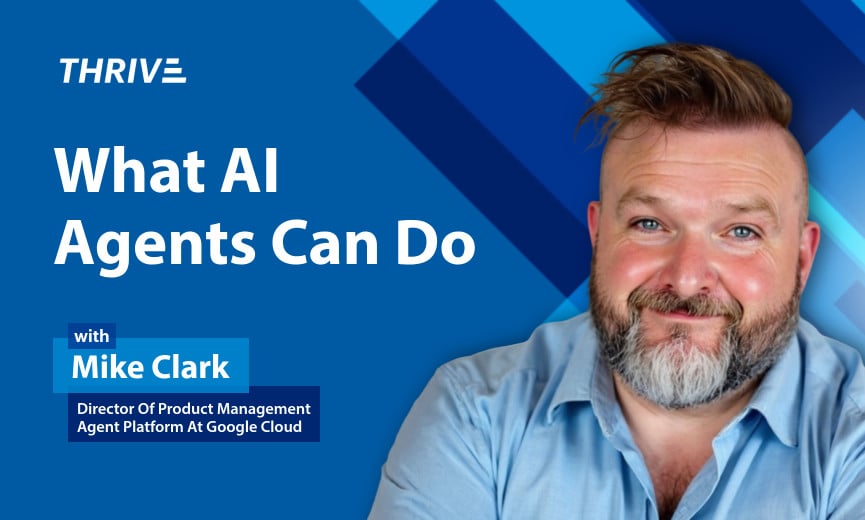
Your refrigerator ordering mayonnaise on its own? That future is closer than you think. Google's Mike Clark joins Gene Marks to break down what AI agents really are, why your website needs to be ready for them, and how small businesses can put them to work. From deep research to smarter buying decisions, discover how agents can save you time, money, and a whole lot of busywork.
Topics include:
00:00 – Episode preview and guest introduction
01:12 – Meet Mike Clark
04:02 – What is an AI agent?
07:32 – The agentic web and why websites must change
14:10 – Overview of the Google Cloud agent platform
18:32 – Small business agent use cases
23:15 – Can you trust agents with critical decisions?
26:35 – Privacy concerns and choosing your AI platform & ecosystem
31:00 – Final advice to small businesses
32:13 – Wrap up and thank you
Connect with Mike:
> LinkedIn
Want to start experimenting like Mike suggests? Grab our free AI & Automation Toolkit to find your biggest automation opportunity.
Simplify your business operations: Visit paychex.com/Meet-Paychex to learn how Paychex can handle your HR and payroll so you can focus on what counts.
Have a question for upcoming episodes or a topic you want covered? Let us know!
View Transcript
Mike Clark (00:00)
Be experimental, be curious, and play with those tools out there and find the things that really, really expand your business. And I'm shocked every day how I see people open up new parts of their small business by things that they've unlocked just by using gen AI in a new way.
Announcer (00:19)
Welcome to THRIVE, a Paychex Business Podcast, your blueprint for navigating everything from people to policies to profits. And now your host, Gene Marks.
Gene Marks (00:30)
Hey, everybody, it's Gene Marks. And thanks for joining us for another episode of the Paychex THRIVE Podcast. It's all AI today. We've been doing other episodes on AI too, mainly because as our guest, Mike Clark, is going to even further explain to us, for years I've talked about different issues that impact all of us as business owners, like taxes in the economy and inflation. All those things are very, very important, but AI is probably one of the most disruptive and significant things to impact businesses of all sizes. It's generational. So, we are spending some time on this topic on this podcast, and I am absolutely thrilled to have Mike Clark with us. Mike is the Director of Product Management Agent Platform at Google Cloud. So, Mike, I'm going to, I'm going to start out with, like, just two questions to start, you know, to get with. First of all, tell us a little bit about yourself, just briefly about your history and how you arrived at this, you know, at Google. And then we've got to understand what the heck Director of Product Management Agent Platform at Google Cloud means and what your job's all about. But just first of all, thank you for being here and tell us a little bit about yourself.
Mike Clark (01:38)
Yeah, I'm really glad to be here. Thanks for the invitation. And actually, I love what Paychex has been doing with this series. I've been listening to a bunch of them myself. So I, so my background, I, out of college, worked as an engineer, worked in both big companies and small companies. I worked in telecom. I had a startup with some friends that was way too many years ahead of its time doing solid state storage. I was one of the early folks at Photobucket and helped grow it. Built my own security startup as a small business to help parents figure out what their kids were doing online, and then was CTO for a while at VSCO. And then I spent the last six years before coming to Google at Meta, working on privacy and working on generative AI. And I came to Google because I really wanted to help businesses be able to take advantage of what agents have and help them be able to deploy them responsibly and help them be able to deploy them in ways that they're going to get the most benefit out of.
Gene Marks (02:47)
Okay, that is just great. So, I mean in summary, you're a complete and total nerd like myself.
Mike Clark (02:52)
That's exactly right. I grew up on a farm and I enjoyed that life, but I knew I didn't want to do that forever.
Gene Marks (02:58)
I mean, that is hilarious. Well, we're both proud of being as nerdy as we are. So, you are director of Product Management Agent Platform at Google Cloud. What does that mean? Like what is your job?
Mike Clark (03:08)
Yeah, I think my day-to-day job is in a lot of ways me and the team that I help support is the tip of the spear for agents. We work with Google DeepMind, we work with the rest of Google and we package up agents in a way that using things like agent developer kit that we'll talk about later. That is how you software development tools to build agents, how you host and run them, how you govern them, how you optimize and eval them. And we do this for Google to run its own agents. We do this for us to build our own products like Gemini Enterprise and a whole series of other products that we provide and build. And then we also provide that same platform to customers to be able to build their agents on top of today, from the smallest of businesses to the largest of businesses.
Gene Marks (03:58)
That is okay. That is great. When we started talking about AI, obviously just a couple years ago with OpenAI and ChatGPT, it was all about generative AI and using these chat bots and platforms to, you know, to generate results for us to get answers to questions that we have or, or generate a different and better email or policy or something like that. And obviously everything is now going agent. Okay. So for, for a small business owner, you know, there's some people have confusion. I'm not sure why, to be honest. Right. Like, you know, like, you know, to me like an agent, we've all been familiar with, with the word agent forever. I mean an agent is somebody that does something on our behalf. You know.
Mike Clark (04:47)
A ticket agent, a customer support agent. They're somebody that helps you. Yeah.
Gene Marks (04:50)
Yeah, travel agent, right? Yeah, yeah. So, you know, talk to me a little bit. There's no difference in AI agents. Right? It's the same concept. Right.
Mike Clark (04:58)
It's in so many ways it's a very similar concept. I like to, I like to start just explain like the differences when I started with chat and generative AI, it was me just having a conversation with the model, I could ask it a question. Who is Abraham Lincoln? And the model is trained on some data from somewhere that knew who Abraham Lincoln was. But if I ask it about an event that's newer than when the model was trained, that's where this next round of things started to really grow from a momentum perspective. And the model would have to go find information. If I asked about the Canadian wildfires, which are such a tragedy.
Gene Marks (05:35)
Right. They're going on while we're recording this. Yeah.
Mike Clark (05:37)
Yeah, current when we're recording this. But not something the model knows. It would actually have to go out and look at news or information from the Canadian government to understand what's happening. But it does that in one step. Like, how do I do this? Get that data, get it back to me. What agents unlock is a series of things. It's that model that we talked to originally. It's this additional data, but it's this layer of orchestration that allows a model to think in multiple steps. And so, if I were going to ask, what kind of jacket do I need to wear today in Philadelphia? Something needs to go look at, well, what is the weather? What kind of jacket would I wear based on different kinds of weather? Where can I get those jackets? What's available? And that's what an agent does, is it starts to take multiple steps at a time, which unlocks the capabilities of a model to be able to do so much more than when you just talk to it directly. It allows it to take actions and think more.
Gene Marks (06:40)
Right. So the example that you gave makes a lot of sense. Like I would have to go on Google and Google different things to get me the full answer. And you're saying that an agent does all that for me. Right? Like almost combines all those different steps to give me that same answer. But what about then you mentioned about taking action. So, like, then will it, you know, for example, you use the example like, what, you know, what coat should I wear today in Philadelphia? And can't agents can, you know, a design agent go and buy you that coat?
Mike Clark (07:18)
The capability fully exists today. I think there's some things that hold back making decisions like that today. I think it's, you know, but I think like the capability is there.
Gene Marks (07:29)
So, Mike, that's all really interesting. You know, just this past week, actually, I was at a conference. I'll give them a shout out. They're called, it's a company called Moz. M-O-Z and you know, they're well known for SEO and you know, content marketing and all that kind of stuff. A lot of big brands around me. So there was a few speakers that were talking about the agentic web, you know, and one speak, actually a guy named Michael King gave a great example. He said, like, you know, we are, the capability is here now, but it'll be more prevalent, you know, around us, where our refrigerators will be able to detect when we're low on mayonnaise and then it will go online without us even doing anything and, you know, find the brand of mayonnaise that we like at the best price possible and then order that mayonnaise and have it shipped to us without any human involvement, you know, and everybody in the audience are like, you know, okay, you know, we understand that that capability does exist. But his other point when we're talking about agents in the agentic web was that he says that very few websites are prepared for this right now. He says that, you know, websites have to, by the way, there's another woman that came on from Wix, W-I-X, which is a website provider. You know, they're sort of salivating this company because they provide websites to businesses and they're like, well, you need to be setting up protocols on your websites, many of them from Google, so that if an agent visits your site, it can navigate your site, it can understand the design, it can have accessibility, it can, it can do payments on your site, it can, you know, access data from your site about the mayonnaise that you want to sell, for example, you know, and if your site is not ready for those agents and you will not be able to sell mayonnaise to that agent because the agent is unable to do it. So, their warning to everybody in the audience was you better wake up and get your sites ready for the agentic web because so much will be running on bots. Now this impacts countless small businesses, you know, which is why I bring up the topic. So me your thoughts on that. Is it, is this real? You know, what, you know, how will this impact businesses? What should we be thinking about?
Mike Clark (09:42)
Yeah, I think, you know, we've, I think as both big and small businesses, we've all gone through tons of changes the last 20 years. It's funny because I, I heard that mayonnaise example in 1999 from a refrigerator and I heard it again like 10 years later. And I heard it again now.
Gene Marks (10:00)
That's funny.
Mike Clark (10:01)
It's funny to watch that one get replayed over and over.
Gene Marks (10:03)
Yeah, you would think they would change it like, I don't know, Italian dressing. You know, pickles? Something, doesn't have to be mayonnaise.
Mike Clark (10:09)
Something. It tells you how little we've done in food advancements since then.
Gene Marks (10:16)
How little innovative we are.
Mike Clark (10:19)
I do, I do love the example though, because when you talk about, like, how you prepared, you know, how you prepared your website for search in 2005 is very different than even how you prepared for mobile in 2012 is very different than how you prepared for... And in each of those instances, it's a mix of how did I make the site fit the form factor of what was needed, how did I change content so that it was presented in a way, how did I do these things? And I think what's driven all of those changes in the past have been consumer changes. And the biggest shift in consumer behavior around agents have been people using Gemini, people using ChatGPT, people using Anthropic to go ask those questions, where they might have gone in search traditionally and seen a list of blue links and, you know, even AI search and other things like that. I don't, I don't work on that, so I don't have those details. But I think for businesses and agents, it's really about how do I want an agent to be able to interact with my site? Do I want to present at all these options? Do I want to present at others? I think if you've worked with Gemini at all recently, one of the options that's showing up for folks is Spark, depending on which version you have. And it goes through and does so much recursive work to help you get to an answer. And it does that by going to different sites. It does that by going and looking at that content and then discovering further. Even a regular agent that you build as a company is gonna go out and do that. And I think companies like a small business, if you think about all the micro decisions you make during the day, the more that you can have an agent start to offload, that starts to benefit you. And really think about it from your perspective, who are the companies that you're going to? How are their sites structured? How are you making it easier to do that? And I've seen lots and lots of places do that. I've seen like CVS trying to make it easier for small businesses to be able to interact and shop and do things. I've seen other kinds of businesses do similar things and all they're doing is they're simplifying their site. They're removing tons of extra interactions. Or, you know, think back in the web 1.0 days, the flaming ants aren't needed. Those are a distraction to the agent. And so I think like keeping things simple, having enough content and context. Context is a word that gets thrown out there a lot, which is knowledge for the model to understand what's happening or the agent to understand what's happening and having enough context for it to know why it would make this decision from a purchase perspective or how to do it.
Gene Marks (13:06)
You know, what you're saying is that it's like people have to redesign or re look at their websites and different than what we're used to. Instead of making them amenable to humans to visit, more and more, we need to make sure that they are amenable for bots to visit because those are, you know, those are ultimately going to be the vast majority of visitors to our sites are bots that are being sent to them to research, find information, ask for a, download something, request information, buy something. It's a bot thing. And I think that's gonna have a big impact on small businesses and there. And you know, you brought up a really good point. Like you're right. Back in like 2012, like I remember speaking to business groups and saying like, everybody's got to have a mobile site. It's coming. You know, people are accessing stuff on your phones and blah, blah, blah. And you know, now like the message is you gotta make sure that your website is, has the right protocols to be able to, for agents to, you know, to, to troll your site. And that's, you know, that's where...Okay, so you're, you're, you're in product management, you're you know, product manager at Google. Right. Most of the people that are watching this, I'm going to say without insulting people's intelligence, when you think of Google, I mean we think of, you know, people are using Google Workspace. We're obviously, you know, we're familiar with Gemini, we're familiar with Chrome and you know, browsing and searching on Google or whatever. What products do you manage? Like why, you know, you know, what are you selling to businesses right now? Why and why are they important? Tell us a little bit about your, the products that are under your domain as it is.
Mike Clark (14:41)
Yeah, in the domain that I, that I help support. It's how to build an agent and then how to actually share that with the world and help it interact with, whether it's interact with sites, whether it's interact with a company's customer support infrastructure, whether it's how they build things internally or do other kinds of other kinds of examples. And so, it's, we build the software that helps people and agents build agents. It's funny, we talked, we. Yeah, the tools. Yep. So Agent Developer Kit is one. And so that is the primary way to build an agent today on Google Platform, you can provide it just a very simple set of instructions. It'll build that up. We also have this agent studio that's part of the agent platform that I don't know how to write code, but I can drag boxes together and type in a prompt that I want and build an agent with very, very simple, very simple steps. And on the back end, it builds the code for you and helps deploy the agent that you're trying to build. And so that's the Agent Studio. We also build out, it's called Gemini Enterprise Agent Platform, which takes care of four things. It's those building tools. How do I build an agent, how do I scale that agent? So how do I make it so it's not just in prototype anymore, but it's actually usable? How do I govern that? How do I make sure it's operating in the constraints that I want it to and not doing more than it should? And how do I optimize it? Like, I'm a small business. I don't have an army of AI researchers. How do I evaluate how well it's doing and actually make it better with some simple help and instructions from the tools that we build?
Gene Marks (16:42)
These are, you know, they're called Google development tools. They speak to me like when I hear that, I automatically think, okay, these are developers' tools. Like I, as a business owner will probably be unlikely to use it. I will probably be hiring a developer or somebody that's familiar in AI technology tools like these to develop agents for me. But I'm sure you can also counter that and say, no, no, no, Gene, there are plenty of business owners that are out there that you know, are this, this is well within their capabilities to learn these tools. Talk to me a little bit about that.
Mike Clark (17:19)
Yeah, I think I talked to an industry shift first. I think as an industry we're watching developers want to interact with tools that are more like consumer tools. We see this happening in Claude Code, we see this happening in Codex, we see it happening in Antigravity, where some simplifying what I'm doing and really like caring about the user interface and building better things. At the same time, we're watching more and more consumers act like developers. Where now I can walk into a tool like that agent tool that I talked about or like lots of these no-code agent creation tools and be able to go build. Consumers are more like developers than they ever have been. And we're watching this mishmash of personas and personalities now be in a place that I don't have to understand how to write a line of code, but I can now go connect my Salesforce with my, you know, Twilio number with my other things and start to do things that I would want to do as a small business.
Gene Marks (18:19)
Right. Right. That makes complete sense. All right, you just mentioned about connecting your Salesforce with Twilio or with, you know, maybe your ERP system or maybe your, your email, you know, campaign software. Give me, give me some examples, Mike, of like, you know, what kinds of agents you've seen your customers build that are like, wow, that was, that's some pretty cool stuff, you know, or. that would be helpful.
Mike Clark (18:45)
I think there's agents that everybody uses every day. I think like talking to small business examples. I think a couple things that they do off the shelf that I'm wowed by with what they do every day when one of them is like deep research. How do I take this topic, whether it might be market research, whether it might be a new product that we've always wanted to build. It might be designing something new and starting this research product that before I might have hired somebody to come in and do, I might have taken two weeks as the CEO and gone off and done or the owner of the business and now I can just start it, kick it off 20 minutes later, have the full corpus of information that's available in a really consumable report with some actionable items and understand where I'm sitting in the market and what are some things I could do. I think, two, there's tools like co scientist and other things that for some more complex businesses. I've got a friend that runs a machine shop and something that sounds so manual, yet he's driving everything via agents today on everything from how people are specifying parts and what they're trying to build all the way through to the CNC machines that are cranking out these physical pieces and devices using simple agentic tools that they're using to connect. I think there's, you know, I, every time I, every time I think about the list, I always go look and you know, see who's who's new and next on that list. I think I have a bunch of small business examples that are in everything from like in France with La Maison de Whiskey. Whiskey.fr is they're building out a digital sommelier and how to like help people understand different kinds of whiskeys and things like that. SAI360 is an education company here in the US that helps with you know, ethics training and all kinds of other training and organizations. And they're 99% faster in course creation using these kinds of agent tools and their production cost has dropped 95% and what it's allowed them to do is not replace humans but actually like empower the humans that work there to be able to build better, stronger courses than they could before.
Gene Marks (21:10)
Got it, got it. Do you see many businesses using agents to interact with other businesses? For example, building an agent that checks, you know, an inventory levels of a product and when those inventory levels fall below a reorder point, go out to the supplier or go out and look at other suppliers, find the best price and place a purchase order with that supplier. Are we there yet for something like that? Have you seen that in real life?
Mike Clark (21:41)
I am seeing that happen in lots of prototype phases today. Where people are experimenting with that. I think on a lower-level supply side where they're off the shelf goods. Absolutely. That's happening, that's happening all the time. I want to order this, I need to order these for the office. I need to order these pre-built things. I'm seeing that happen all the time where more and more people are making their inventory available online. They're making it available on websites that agents can talk to or via APIs or via MCP tools. And I know I'm using a bunch of new language but as a, as a builder, these are the kinds of ways that you talk to websites and you talk to different tools. But I'm also watching large organizations want to get to a place to where big chunks of their supply chain, they're able to do planning via agent to agent and make some of these purchasing decisions and orders. It's, and I think we're going to see a bunch of it this year before the year rolls out.
Gene Marks (22:45)
I agree. And by the way, I mean MCP, Model Context Protocol, is like the standard way, you know, people are connecting their AI platforms to their data. And that is, I'm seeing more and more of that as well. Mainly because it's become not commoditized but just popularized through Claude for Business and you know, Codex, and you know, so it's, I'm seeing more of it out there. There is, there's a trust issue obviously. Right. I mean, you know, so you're in the middle of this, okay, I mean this is like your job and you work for Google and all that. So I be flat out and ask you like, so do you trust this stuff? I mean, would you, would you rely on these agents to make purchasing decisions for your business or other critical decisions? Like, you know, do you?
Mike Clark (23:36)
Yes. I'll start with yes and I'll explain why. I think trust is such an important piece for businesses and for individuals in working with AI in general. How do I, how do I start by having a conversation, but how do I eventually trust it to make progress purchasing decisions and other things on my behalf or even send an email on my behalf? Like what kind of email is this going to write to a customer or somebody else? And, and, and you get there by gaining trust. And the way that you build trust is one, total transparency in everything that's happening. I think if you'd have asked me what's keeping small businesses and large businesses from getting out of their prototypes and the things they have working, trust is one of it, but transparency is the other one. I think in the tools that we build and in the best tools that I see out there, you get to see every single thing that the model is doing that the agent is thinking that the agent is taking actions on. And you also have transparency in what context or what data it's using to make those decisions. And so I like, you know, I don't start playing with a new tool and say use every single piece of data out there and take every action. I start with, ask me for permission before taking the next step. And most like really good tools have that where I can do that. And every now and then there's this mode called YOLO mode where like go do everything and just say yes to it automatically. And I, you know, I will get to places in a process where I trust it enough because I know what it's doing, it's got enough transparency and I will let it go do that. But just build up that trust in your business and yourself and what you're trying to take actions on and think of the consequences if something did go wrong and build your own governance in your own mind and in your own systems around what actions can be taken.
Gene Marks (25:35)
Yeah, that makes sense. Most of the companies that I'm talking to that are implementing, you know, agentic AI and these are smaller and mid-sized companies, they do exactly what you just said it, the agents work and then they pause so a human can improve this or evaluate and then they move on to the next step. So it's not like you just wipe your hands clean and it just runs. And we might get to that point at some point, but it's, right? I mean, it's no different than having a human being who places purchase orders. And that person, before they place the order, their supervisor has to approve it before it goes. You know what I mean? Like, it's similar concept, right?
Mike Clark (26:13)
And that concept has a name it's human in the loop. And the technical term is a loop that's happening and it's injecting a human in that, in the steps of those decisions.
Gene Marks (26:25)
We only have a few minutes left and you've been, this is great and so informative. I like to ask this question because I get this question all over the place for my clients. So, you're in the middle of this stuff again. You work at Google, Google Cloud. So you know, the, you know, Gemini is in the cloud, Copilot is in the cloud, Grok is in the cloud. You know, Claude is in the cloud. Everything, everything's in the cloud. So typical business owner, you know, frequently asks, how do I know that my data is safe and secure and how do I know that my competitor can't just go on Gemini and with, you know, create their own agent that finds my pricing or what I'm quoting to my customers and then, you know, uses that against me? How, you know, Mike, how do you respond to that question? Because I'm sure you've heard it.
Mike Clark (27:14)
I've heard it a lot. And I think it's a, I think as Google, it's one of the benefits of working for Google Cloud. It's one of the reasons I chose to came here. Come here. Because as Google, we have everything from the infrastructure to run this on. We have our own chips, we have our own tools like Workspace, and we have all the pieces that are all collected under one roof that... You come to Google and you can build your entire business around all the pieces that we have and then connect externally to the pieces that we don't through the partnerships and everything that we have. And that's why we've seen so much growth on the small business side because there's so much gravity because of people have their data, they have Workspace, they have all these things at that size business that really drive them this direction. I think the question around, where do I choose to put my things and what do I open up and what don't I? Those are choices that you as an individual business need to make. When you're, when you're going and looking through like the terms or how I set it up by default, do I want it to train on my data? Do I not want it to train on my data? Those are choices that you have to make on how you want to expose that. And I think what's really good is as an industry, most companies are really transparent about what those practices are. And the ones that are most transparent, that plays a big role in that trust. And I think, like choosing that and doing that, I think also finding out where people have good experiences and like, where they're building and where the, where the momentum is really happening. You know, we see that in ourselves with Google. We see a lot of that with Claude as well. We're seeing, we're seeing lots of momentum in the marketplaces where people are not just building good models, but building good products to support those models. And I'm very proud of the work we've done.
Gene Marks (29:15)
Yeah, you should be. Is there, do you see this going down a similar road where business owners are going to be, this is my last question, I'll let you go again, you're great. But do you see the business owners are going to have to ultimately sort of choose where to drink their Kool Aid, you know, to use, you know, to use a term. I mean, it just seems, it just seems like if you really want the most secure, the safest, the most, the best integrated, the least amount of headaches, you're going to be like, all right, I'm going to go down the Microsoft road, I'm going to go down the AWS road, I'm going to go down the Google road, you know what I mean like? And then just lean into their tools. Is that where you think the world's going?
Mike Clark (29:57)
I do think a lot of that's going to come to that point. I think, as you know, I'll toot our own horn for a moment. I think it's why, you know, as Google Cloud, we have all the models that you can get out in the market, with only a couple exceptions, run inside of Google Cloud and you can control hosting it yourself. Open-source models, closed-source models, they all live here. And so when I'm building an agent, I'm not just forced to use Google models. I can use whatever I need. And two, we're the only place that has the hosting infrastructure and the research labs under the same roof. And so when you talk about that integration, it's not just integration and connecting APIs like it was 10 years ago. It's now integration in how is the model doing these things and how are we building the tools in a way that the model's best. And that integration story is going to, that integration story is going to play a really important role. I think in terms of kind of my closing, I think there's two lines that we're following. I think one is this capability line of models that is this like straight up exponential. The models are getting better, the agents are getting better, and that continues to grow. If we look at both big and small companies, organizational readiness is very logarithmic and it's very, very flat. And what we have to find as builders, as business owners is what are the step functions for us that help connect the business I'm building to that, to that technology curve to take the most advantage of it. As a small business, you don't have 50 years of legacy business. You don't have, you know, you don't have regulations in the same way against large businesses. You get to follow that technology curve as close as possible. And so I think like, be experimental, be curious and play with those tools out there and find the things that really, really expand your business. And I'm shocked every day how I see people open up new parts of their small business by things that they've unlocked just by using GenAI in new ways.
Gene Marks (32:08)
Agree. I agree. Everyone, Mike Clark is the Director of Product Management Agent Platform at Google Cloud. We have been talking about agents and Google's infrastructure and just the future of agents as well and how you can be using them in your business. Mike, your insights have been great. I really appreciate it. Would love to, we can speak again in a year and it'll probably be a completely different conversation. Right? So, who knows?
Mike Clark (32:31)
We can probably speak in a month and have a different conversation.
Gene Marks (32:34)
Yeah. Also true. Also true. But for now, this is really, really super helpful stuff. So I appreciate your time and thank you for coming on the, coming on the show.
Mike Clark (32:41)
This is great. Thanks for having me.
Gene Marks (32:43)
Good. I appreciate it, too. Everybody, you have been watching or listening to the Paychex THRIVE Podcast and my name is Gene Marks. If you need help or advice in running your business, sign up for our Paychex Thrive newsletter. Go to paychex.com/Thrive and please subscribe to our podcast either on YouTube or on your favorite podcast platform. Again, my name is Gene Marks. Thank you so much for joining us. We will see you again next time. Take care. Do you have a topic or a guest that you would like to hear on THRIVE, please let us know. Visit payx.me/ThriveTopics and send us your ideas or matters of interest. Also, if your business is looking to simplify your HR, payroll, benefits, or insurance services, see how Paychex can help. Visit the resource hub at paychex.com/WORX. That's W-O-R-X. Paychex can help manage those complexities while you focus on all the ways you want your business to thrive. I'm your host Gene Marks, and thanks for joining us. Till next time, take care.
Announcer (33:41)
This podcast is property of Paychex, Inc. 2026. All rights reserved.